


Every person wants to attain some type of power. The material world consists of three subtle elements: mind, intelligence, and false ego. It is this ego that causes one to crave attention in the form of fame and fortune which come as a result of the acquisition of some sort of power or perfection in a certain field.
Since the material world means a place where material qualities exist, known as gunas, each person has different desires. In fact, that is the definition of karma, i.e. work performed with desire for fruitive results. Karma is the cause of our being in this material world and it is also the determining factor of the type of body we will have in the next life. Some people seek power in the form of yogic siddhis. We are all familiar with the term yoga, which we generally associate with the hatha yoga system involving various breathing exercises and sitting postures. Yoga actually means to have union of the soul with Krishna, or God. The hatha-yoga system was created as a way to allow those who are overly attached to their senses to be able to break free of them. This system naturally has very nice side effects, among which are the yogic siddhis. Siddhi means a perfection or an extraordinary power, and by practicing this type of yoga very strictly and sincerely one can gain such powers as being able to become infinitesimally small (anima), being able to travel to various planets at the speed of the mind, and being able to determine the time of one’s death. The full list is delineated in the Vedic scriptures.
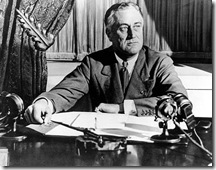
One doesn’t have to a yogi to crave material power. Bodybuilders train very hard to be able to have a physique which they can show off in magazines and on videos. They strive to be able to lift very heavy weights, wanting to bench-press more than anyone else in their field. Politicians are some of the more well-known seekers of power. In today’s political scene, it is more and more common to find that the people who run for office are already millionaires in their private life. Having amassed large amounts of money, they still aren’t satisfied and thus they look to politics as a means of acquiring even more power. Once they get into office, they have a very difficult time giving up the post. In New York City, Mayor Michael Bloomberg recently got the legislature to change an existing law that would have limited his term in office. He is now free to run for mayor again. These term-limit laws were enacted by the public as a way of preventing one person from amassing too much power by remaining in office indefinitely. The first president of the United States, George Washington, voluntarily stepped down after serving two terms, a tradition which was honored for almost one hundred fifty years after that. However, during the early 1930s, President Franklin Delano Roosevelt was elected to office for an unprecedented four terms. So unwilling to give up his position, he eventually died in office. Congress subsequently passed the twenty-second amendment to the Constitution which now limits presidents to serving only two terms.

And what does one gain from these perfections? According to the Vedas, this human form of life is meant for God realization. Any activity which helps us achieve this goal is worthwhile, and anything that takes us further away from God is considered a waste of time. In actuality, one doesn’t have to work very hard to achieve all these material perfections, for they come naturally to those who engage themselves in devotional service. Technically known as bhakti yoga, devotional service is the discipline of dovetailing all of one’s activities with the desires of the Supreme Lord Krishna. One may wonder what these activities entail. They can be anything actually. One can be singing and thinking of God. One can even be eating nice food and thinking of God. There are nine distinct processes of bhakti yoga, as outlined by Prahlada Maharaja: hearing, chanting, remembering, worshiping, serving the lotus feet of the Lord, offering prayers, carrying out the orders of the Lord, becoming friends with Him, and surrendering everything to Him. One can attain perfection of life by only engaging in one of these processes.


