


There are various definitions of what exactly constitutes religion. Some take it to be a system of studying God, while others equate religion with piety and righteousness. Based on the authority of Shri Lakshmana, we can understand that real religion is that which is in accord with God’s interests and which teaches people to serve Him in a loving way.

God can be realized in three distinct features: Brahman (the impersonal energy that pervades all of creation), Paramatma (the Supersoul that exists inside every living entity), and Bhagavan (the Supreme Personality of Godhead). Bhagavan is essentially what most people equate with God. However, over time, various pseudo-yogis and mental speculators have come to believe that Brahman is the only feature of God. Thinking in this way, they have taken away God’s personal aspect, making Him merely an energy that we must merge into. Through this philosophy, many sub-standard religious systems have gained in popularity, such as hatha-yoga and jnana-yoga. All these systems are mentioned by Lord Krishna, God Himself, in the Bhagavad-gita. They are legitimate self-realization methods, though subordinate to bhakti-yoga, provided that one still believes in God’s feature as Bhagavan. If one denies God’s personal existence, then any religious system derived from that line of thinking will be a cheating one.


Taking everyone to be equal to God represents a grave offense at the feet of the Lord. The demigods, referred to as devatas or devas in Sanskrit, are elevated living entities who serve as Krishna’s chief deputies in managing the affairs of the material world. They can be best thought of as Krishna’s Cabinet secretaries. Though they are highly elevated and possess great powers, they are nevertheless considered jiva-tattva, meaning they are of the same quality as we living entities. God expands Himself in various forms, meaning that we are all qualitatively the same as the Lord, but quantitatively we are quite different.
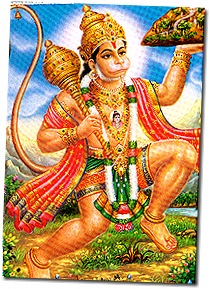
Krishna takes various forms that are vishnu-tattva, such Lord Rama, Narasimha, Varaha, etc. These forms are equal in potency to God Himself. Concentrating the mind on these forms is as good as worshipping God. Yet one shouldn’t mistakenly take the various forms of Lord Vishnu to be on an equal level with the demigods. This type of thinking is strongly condemned by all the great devotees, including Lord Shiva. While describing the life story of Lord Rama, Shivaji sternly warned his wife Parvati not to think of Rama and His body as being like that of an ordinary human being. The great devotee of Lord Rama, Hanuman, constantly sings the glories of Sita-Rama and concentrates his mind on their forms. He doesn’t have the time to waste praying to someone who isn’t real or someone who is on the same level as an ordinary human being.


“Fools deride Me when I descend in the human form. They do not know My transcendental nature and My supreme dominion over all that be.” (Lord Krishna, Bhagavad-gita, 9.11)
When Krishna came to earth as Lord Rama many thousands of years ago, as part of His pastimes, He accepted an order from His father which required Him to live in the forest for fourteen years as an exile from His kingdom of Ayodhya. Rama’s father, King Dashratha, had three wives, the youngest of whom was named Kaikeyi. She wanted her son, Bharata, to ascend the throne, so it was at her insistence that Rama was banished. Dashratha had to abide by her requests since he had granted Kaikeyi any two boons of her choosing on a previous occasion. During those times, kshatriya kings were very honest and they strictly abided by their word.
“O righteous soul, why can’t You see that, in the name of religion, both of them are deceiving You and acting in their own interest through dishonest means to keep You away from acting properly?…The act of enthroning anyone except You is not to the liking of the people. Pardon me, but I cannot tolerate this act of the king, O brave one.” (Lakshmana speaking to Lord Rama, Valmiki Ramayana, Ayodhya Kand, 23.8, 23. 10)


In reality, Dashratha could not be blamed, for he wanted Rama to remain in the kingdom just as much as anybody else. So in this sense, Dashratha was acting piously by adhering to his word. Rama knew this as well and, for this reason, He willingly accepted the punishment handed to Him. Still, Lakshmana’s mood of devotion is quite exemplary. He loved God so much that He couldn’t stand seeing anyone harm Him. This is the example for everyone to follow.
True religion is that system which is in line with God’s interests. God is all knowing and self-satisfied, atmarama. He is need of nothing, but still He is kind enough to accept our service. Lord Rama appreciated Lakshmana’s feelings and rewarded him by allowing him to accompany Him and His wife, Sita, for the duration of the fourteen year exile period. If a religious system teaches one to love and praise God, then it is bona fide. Any other system is a cheating religion and should be abandoned.