


yathā dṛptaśca mātaṅgaḥ śaśaśca sahitau vane |
tathā dviradavadrāmastvaṃ nīca śaśavat smṛtaḥ ||
Download this episode (right click and save)
If you are a sincere spiritual seeker, you will surely get excited to meet an elevated personality. Others have assigned them that lofty status. “They are so great; you HAVE to meet them.” When there is much fanfare surrounding the person’s visit to the town, you will be interested to meet them. A key teaching from the Bhagavad-gita says that the meeting alone doesn’t necessarily change things. Indeed, any person, regardless of the depths to which they have sunk in terms of behavior, can be rescued, but the key is to follow the instructions offered by the elevated personalities. The indication of that acceptance is knowledge, which manifests in behavior. In the Ramayana, the same concept is validated many times, including in interactions between Sita and Ravana.
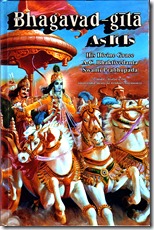
“Even if you are considered to be the most sinful of all sinners, when you are situated in the boat of transcendental knowledge, you will be able to cross over the ocean of miseries.” (Lord Krishna, Bhagavad-gita, 4.36)



This is where the controversy starts. If someone else doesn’t believe in God, how can they consider others who share the same belief to be sinful? But actually, sin is much easier to understand than as blind faith or rejection of a specific doctrine. Sin is just doing something the wrong way. It is a sin to eat too much when one is on a diet. It is a sin to get drunk before taking an important exam. It is a sin to put your hand in a fire when cooking. The sins in these instances are not determined by a book, though they may be described in one. The negative reaction is what determines the sin. The consequence is automatic; it is not based on what someone says. It is a real reaction.


Knowledge is the rescue. Knowledge of Godhead is light, and ignorance of Him is darkness. Persons can be situated in different parts of the ocean. Those who are closer to the shore, to reaching a permanent rescue, are considered pious, whereas those who are far away in the ocean are considered sinful. Nevertheless, despite their different locations, the means of rescue is the same. The most sinful person is equally as eligible for rescue as the most pious, though it is generally more difficult for the sinful to accept the means of rescue.


Sita says that Ravana is the lowest of the low. He has taken away a woman who is already married to someone else. That woman is devoted to her husband in thought, word and deed, so taking her away does no good for the thief. Ravana is the thief, and instead of handing Sita back to her dear husband, he keeps trying to bring her to his side. This has no chance of working, as Sita can never not be devoted to Rama.
The Ramayana, which is an extension of the Vedas, the original scriptural tradition of the world, says that Rama is God and Sita His eternal consort. They appear on earth every now and then to teach lessons, take care of nefarious characters, and give pleasure to the supremely pious souls. As Sita is devoted to Rama, she is an elevated personality of the type mentioned previously. Meeting her should be beneficial.
The key, of course, is to take her instructions. Ravana had plenty of association with her. He took her by force back to Lanka, his kingdom, but still he never became situated in knowledge. When we see an elevated personality, we may meet them, touch their feet, and even talk to them for a while. A difference is only made, however, when there is acceptance of their words and implementation of the principles. The theoretical knowledge is called jnana in Sanskrit and the practical realization is known as vijnana. To be situated in knowledge means there is both jnana and vijnana.


In Closing:
When spiritual fulfillment you seek,
Eager for saintly personality to meet.
With attention and eagerness much,
In hearing their feet you may even touch.
But key to be in knowledge’s boat,
Otherwise difficult to stay afloat.
Ravana the most saintly person saw,
But valuable lessons from her not to draw.

