


diṣṭyā hi na mama vyartham devi sāgara langhanam |
prāpsyāmi aham idam diṣṭyā tvat darśana kṛtam yaśaḥ ||
Download this episode (right click and save)
You’re on vacation. You planned this trip a while back, and you’ve been looking forward to it ever since. It’s not easy to break out of the daily routine, but sometimes it’s good for you. It brings a different perspective. It recharges the batteries, so to speak.
On this vacation you’re at a foreign destination. Naturally, you want to check out some of the historical landmarks. At each site, you take a picture with yourself in the shot. Known as a selfie, it’s a way for your friends online to see what you are doing. You become famous, in a sense, through a picture. “Look where I am.” “See what I found.”
A long time back, a dedicated servant to the Supreme Lord Rama made an amazing discovery. He hadn’t necessarily visited a famous site. The discovery was made in Lanka, which at the time was more infamous than famous. The place inherited the qualities of its leader. It is for this reason that in Vedic culture the importance of the leader is stressed.
yad yad ācarati śreṣṭhas
tat tad evetaro janaḥ
sa yat pramāṇaṁ kurute
lokas tad anuvartate
“Whatever action is performed by a great man, common men follow in his footsteps. And whatever standards he sets by exemplary acts, all the world pursues.” (Lord Krishna, Bhagavad-gita, 3.21)


In Lanka, the leader was overtaken by his senses. This characteristic is known as ajita-indriya. Ravana got his name due to his terrifying scream. He literally terrorized others with his amazing powers, which came to him through worship of demigods. He was against the real God, however. He didn’t realize that for any demigod to grant a benediction, the sanction from the Supreme Lord must be there first.
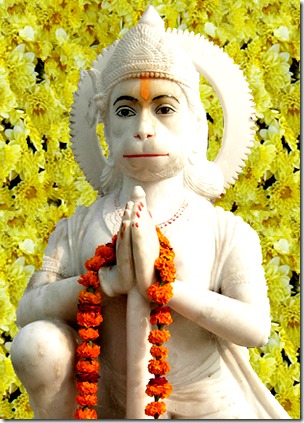
The area itself wasn’t famous, but Hanuman found someone who had gone missing. She was so important that a massive army of monkeys was looking for her. They were searching the entire world, in fact. Hanuman made the discovery after a difficult journey. There were many obstacles along the way, and there was the time factor as well. Success hadn’t come, even after a great leap over the ocean.
In the above referenced verse from the Ramayana, Hanuman is speaking to Sita Devi, the princess he has discovered in an ashoka grove. He remarks that now the leap over the ocean did not go in vain. By his good fortune, the effort paid off. Also, it was his good fortune to earn the fame of having found Sita.
At the time, no one knew. After all, he couldn’t very well reveal his presence to everyone. It was an enemy territory. Ravana had taken Sita away in secret. Prior she was living happily with her husband Rama in the forest of Dandaka. The people in Lanka did not help her. On the contrary, they were on orders from Ravana to try to scare her into submitting to becoming the chief queen.
“Yashah, fame, should be according to Lord Chaitanya, who said that a man is famous when he is known as a great devotee. That is real fame.” (Shrila Prabhupada, Bhagavad-gita, 10.4-5 Purport)
In Closing:
By example the great leader showing,
In their footsteps others going.
When success for Hanuman came,
Known that to lead to great fame.
Rama’s missing wife he found,
News to travel through sound.
Through Ramayana to continue to this day,
For fame’s proper role look Hanuman’s way.